
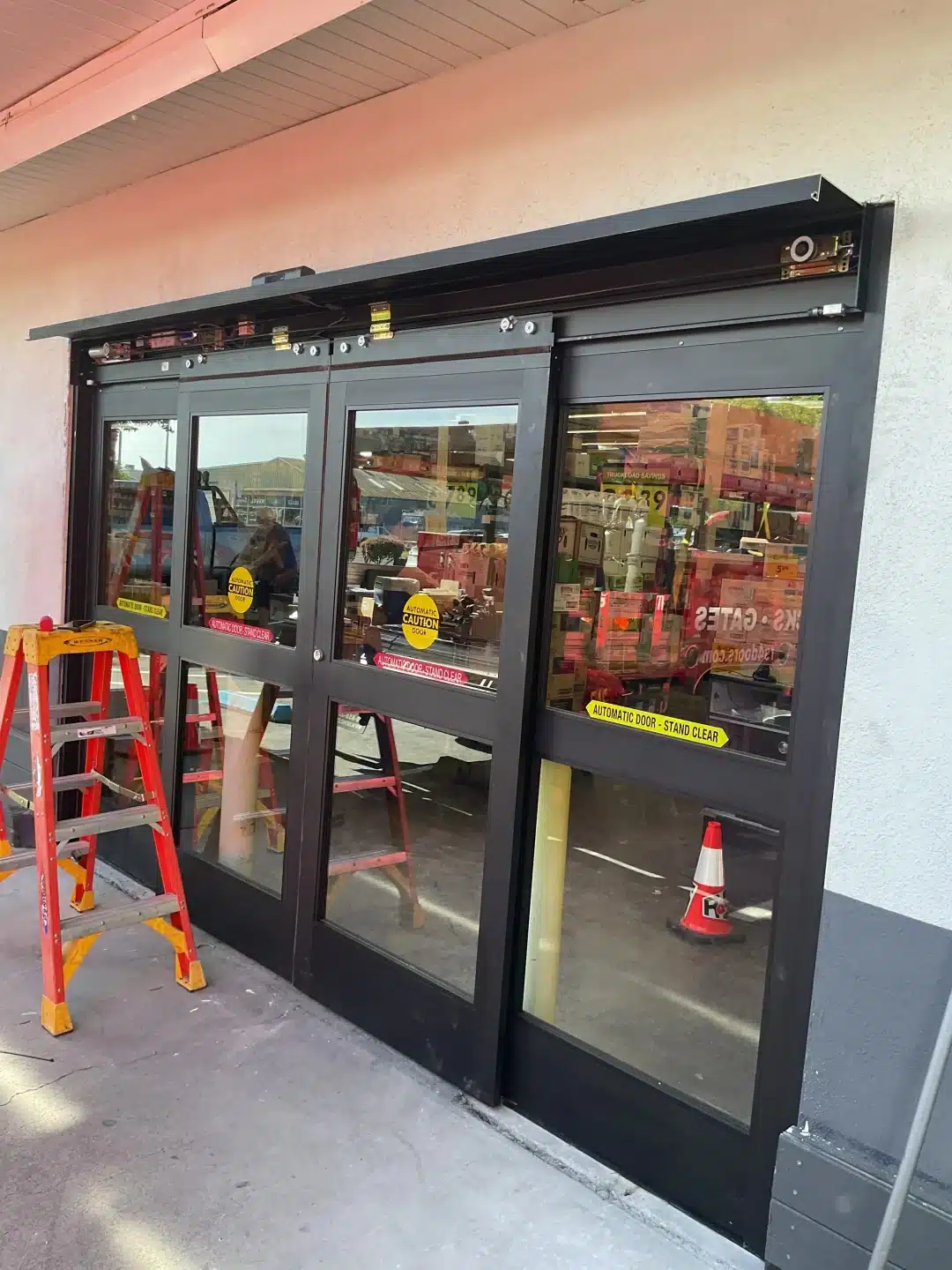
Walk into any busy store, hospital, or office building today, and you will likely pass through a set of automatic doors without a second thought. That smooth, hands-free entry has become something most people expect, and businesses across Richmond, CA are starting to realize that meeting that expectation is not just about appearances. It is about making a smart, long-term investment in their building and the people who walk through it every day.
Commercial automatic doors do more than open and close on their own. They affect how customers feel the moment they arrive, how efficiently your staff moves through your space, and how much energy your building uses throughout the year. For business owners thinking about upgrading their entry systems, understanding the full picture makes the decision a whole lot clearer.
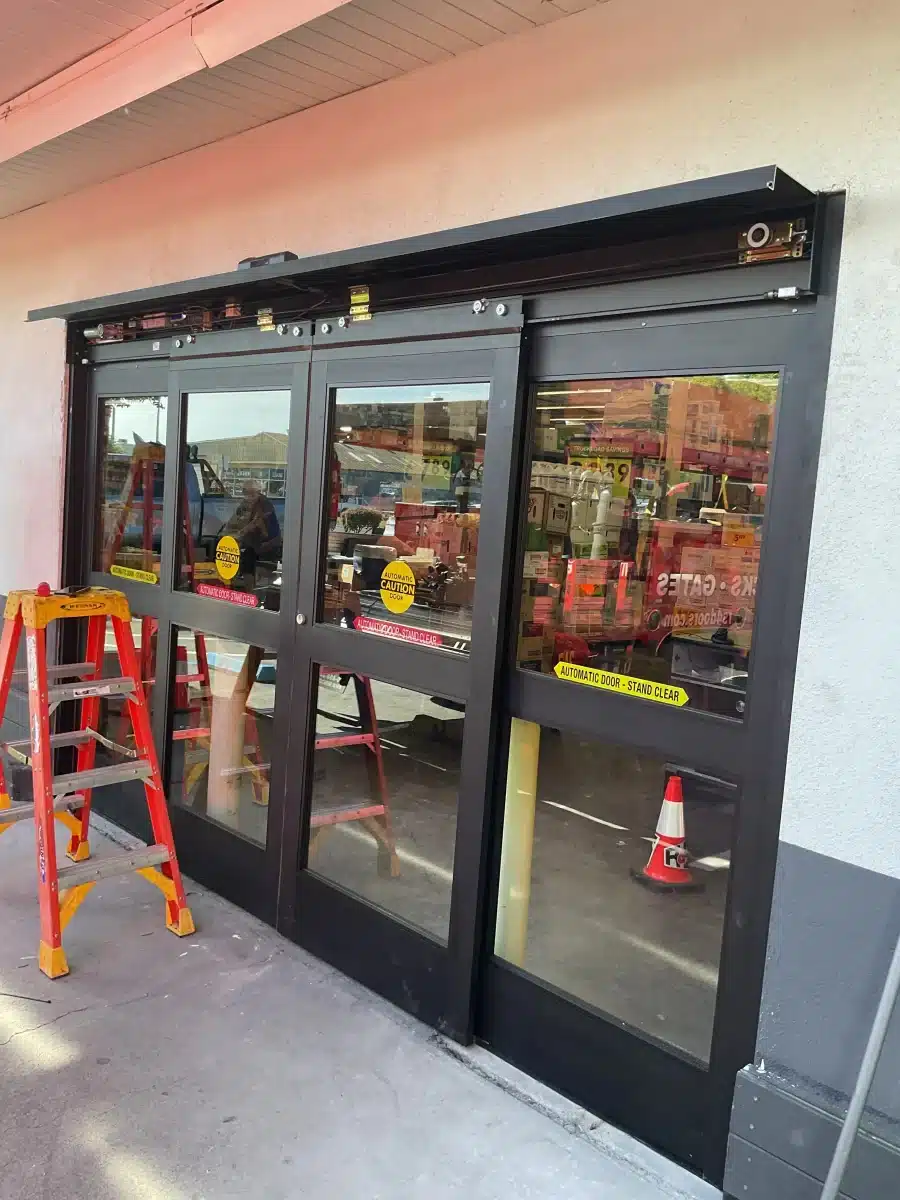
They Create a Welcoming, Professional First Impression
First impressions happen fast, and your entrance is the first thing a customer sees before they ever speak to a single member of your team. A manual door that sticks, swings awkwardly, or requires effort to open sends a subtle message that your business may not be fully up to date. Automatic doors signal that your business is modern, thoughtful, and customer-ready.
Here is what a well-functioning automatic door does for your business image:
- Opens smoothly and quietly without any effort from your customer
- Signals that your business is up to date and professionally maintained
- Creates a welcoming atmosphere before the customer even steps inside
- Reduces frustration during busy hours when foot traffic is high
- Leaves a lasting impression that reflects your brand’s attention to detail
For retail stores, office buildings, and service centers in Richmond, this matters more than most business owners realize. That kind of effortless entry builds quiet confidence in your brand before a single word is exchanged.
Tip: Keep the sensor area clear of clutter and test the door speed regularly. A door that opens too slowly or stops midway can frustrate customers just as much as a manual door would.
For businesses evaluating the right system for their space, see What to Look for in a Commercial Automatic Door to understand which features matter most before making a decision.
Automatic Doors Support ADA Compliance
The Americans with Disabilities Act sets clear standards for accessible entry into public and commercial spaces. Manual doors, particularly heavy ones, can be a real challenge for individuals using wheelchairs, walkers, or those with limited hand strength. Automatic doors remove that barrier entirely.
Here is how automatic doors help your business stay compliant and accessible:
- Provide hands-free entry that meets ADA accessibility requirements
- Eliminate the physical effort required to pull or push open a heavy door
- Allow wheelchair users to enter without needing assistance
- Support individuals with limited grip strength, mobility aids, or visual impairments
- Reduce your business’s exposure to accessibility-related legal complaints
What to check: Make sure your automatic door sensor covers the full approach width and that the door opens wide enough for a standard wheelchair to pass comfortably.
Tip: Work with a certified installer to confirm your door meets ADA specifications at the time of installation. A small gap in compliance can lead to costly corrections later.
They Improve Energy Efficiency in Your Building
Leaving a door propped open or having a manual door that swings wide repeatedly throughout the day causes a significant amount of conditioned air to escape. That means your heating and cooling systems work harder, which drives up your energy costs over time.
Here is how automatic doors help your business manage energy use:
- Open only when someone is approaching and close promptly after they pass through
- Reduce the amount of heated or cooled air that escapes during peak traffic hours
- Some systems include air curtain technology that creates an invisible barrier to limit heat transfer
- Help maintain a consistent indoor temperature with less strain on your HVAC system
- Lower your monthly energy bills in ways that add up to real savings over a full year
For businesses with high foot traffic in Richmond’s varied Bay Area climate, that kind of control makes a measurable difference month after month.
Tip: Schedule routine maintenance on door sensors and closing mechanisms at least twice a year. A sensor that keeps the door open longer than needed is quietly draining your energy budget every single day.
They Reduce Contamination and Support Hygienic Environments
In restaurants, medical clinics, pharmacies, and any food-handling environment, the fewer surfaces people touch, the better. Manual door handles are one of the most frequently touched surfaces in any building, and without consistent sanitizing they become a transfer point for bacteria and viruses.
Here is what automatic doors do for cleanliness and hygiene in your space:
- Eliminate the need for anyone to touch a door handle, push plate, or pull bar
- Reduce the spread of germs and bacteria at one of the highest-contact points in any building
- Support the hygiene standards required in medical, food service, and pharmaceutical environments
- Make it easier for staff to move through doors while carrying supplies or equipment
- Reassure customers that your business takes cleanliness seriously
This became especially visible during the COVID-19 pandemic, and that standard has not faded. Customers still notice, and they appreciate it.
Tip: Even with automatic doors, inspect the door frame, edges, and surrounding surfaces regularly. High-traffic environments still accumulate grime in areas people may brush against.
They Handle High Traffic Without Wearing Down Your Staff or Space
For businesses with constant foot traffic, a manual door becomes a bottleneck fast. Think about a grocery store during lunch rush, a gym at 6 AM, or a hotel lobby during check-in hours. Staff members end up holding doors, propping them open, or customers crowd around waiting. None of that is efficient.
Here is how automatic doors keep things running smoothly under pressure:
- Built to handle thousands of open-and-close cycles per day without performance loss
- Keep entry traffic moving without creating a bottleneck at the door
- Free up your staff to focus on customer service instead of door management
- Reduce wear and tear compared to manual doors in high-traffic conditions
- Perform consistently, whether it is a slow Tuesday morning or a packed weekend afternoon
What to check: Ask about the cycle rating for any automatic door system you are considering. Higher-traffic environments need systems rated for heavier daily use. A door built for a low-traffic office will not hold up in a busy retail space.
DASMA provides guidance on the performance and safety expectations for door systems used in high-demand environments.
They Can Be Integrated with Modern Security Systems
Automatic doors are not just about convenience. They can be paired with access control systems, intercoms, card readers, keypads, and surveillance cameras to create a layered security setup for your building.
Here is what security integration with automatic doors and swing door systems can do for your business:
- Connect to card readers or keypads to control who enters specific areas
- Integrate with intercoms or video surveillance for monitored entry points
- Log entry and exit data so you can track who came and went and when
- Restrict access during off-hours with scheduled locking and unlocking
- Support a broader building security system without requiring a separate door setup
In Richmond, CA, where commercial security is a real concern for many business owners, having an entry system that works with your broader setup gives you better control over your space.
Tip: Make sure the security integration is configured by a technician who understands both the door hardware and the access control software. A poorly configured system can create gaps in your coverage.
They Lower the Risk of Physical Accidents at the Entrance
Heavy manual doors can injure customers or staff if they swing back unexpectedly or are too heavy for certain individuals to manage safely. This is particularly true for older adults, young children, or anyone carrying packages or equipment through a doorway.
Here is how automatic doors reduce the risk of accidents at your entrance:
- Use motion sensors and safety beams to detect the presence of anyone in the door’s path
- Prevent the door from closing on a person who has not fully cleared the opening
- Include anti-pinch features and slow-close mechanisms that reduce the chance of injury
- Remove the need for anyone to hold a heavy door open for the person behind them
- Create a safer entry experience for customers of all ages and physical abilities
What to check: Test the safety reversal feature on your automatic door regularly. If you place an object in the door’s path and it does not stop and reverse, the sensor or safety mechanism may need adjustment from a qualified technician.
Tip: Keep the sensor lenses clean. Dust and grime can reduce sensor sensitivity and affect how reliably the door detects people in the opening zone.
ULSE explains how automatic door safety standards are developed and why they matter for protecting the people who pass through commercial entrances every day.
They Add Long-Term Value and Durability to Your Property
Quality commercial automatic doors are a durable investment. Unlike manual doors that develop alignment problems, worn hinges, or damaged handles over time, automatic systems are engineered for sustained performance under heavy use. Automatic sliding doors, in particular, are designed to handle constant daily traffic while maintaining smooth and reliable operation.
Here is why automatic doors hold their value over the long term:
- Built with commercial-grade components designed to perform under heavy daily use
- Require less frequent replacement compared to manual doors in busy environments
- Add to the perceived value of your commercial property when leasing or selling
- Reflect positively on the overall quality and upkeep of your building
- With proper maintenance, it can serve your business reliably for many years
Tip: Keep a maintenance log for your automatic door system. Tracking service dates and repairs gives you documentation that supports the property’s value if you ever lease or sell the space.
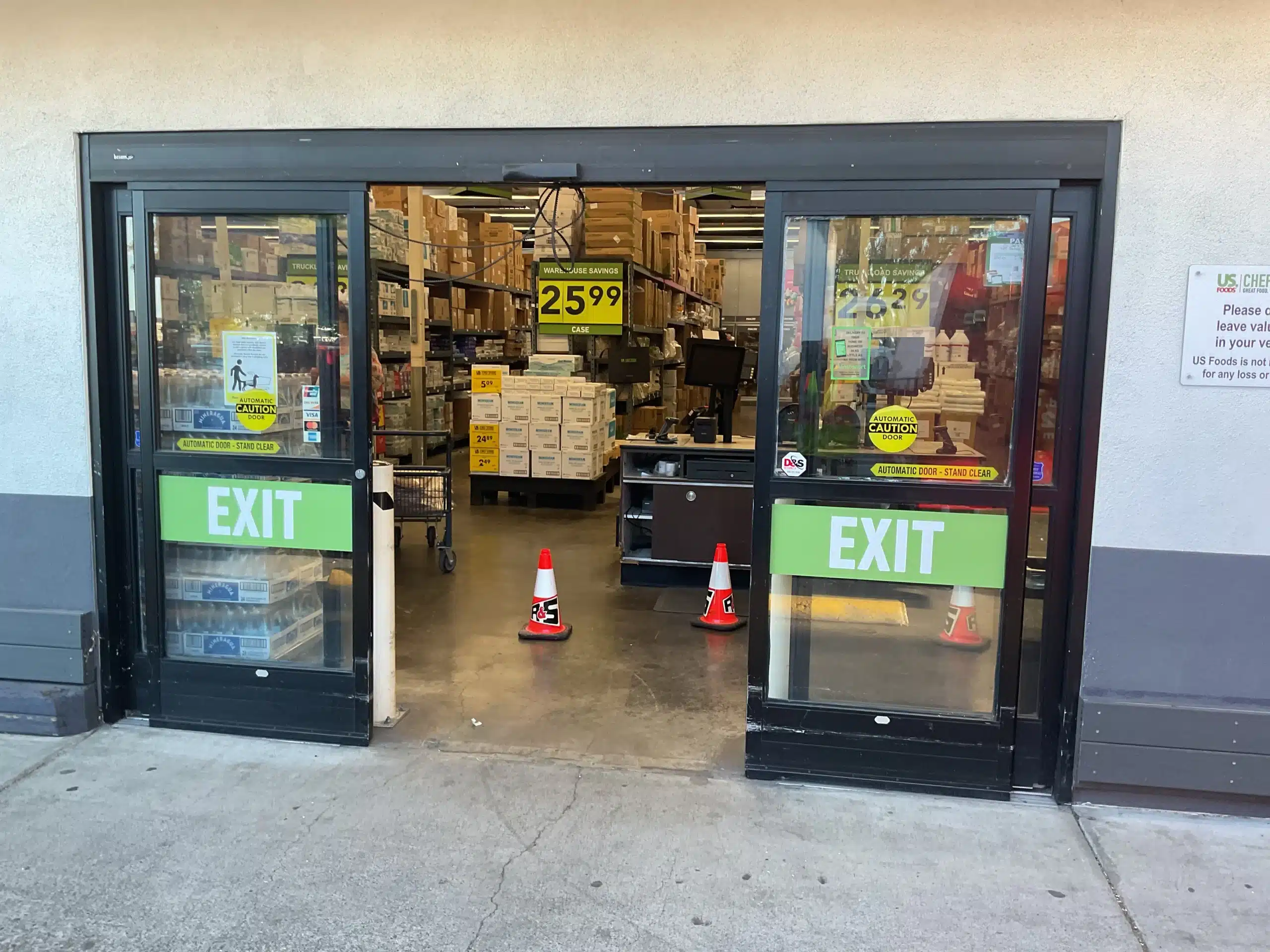
Automatic Doors Support a Smoother Emergency Exit Flow
During an emergency, every second matters. Automatic doors can be configured to integrate with your building’s fire alarm and emergency systems, triggering the doors to open fully and remain open when an alarm is activated.
Here is how automatic doors contribute to emergency preparedness in your building:
- Integrate with fire alarm systems to trigger full-open mode during an emergency
- Allow large numbers of people to exit quickly without a door becoming a bottleneck
- Can be programmed to fail-safe open, meaning the door stays open if power is lost
- Support faster and safer evacuation compared to manual doors in a high-pressure situation
- Help your building meet California commercial fire and safety code requirements
Tip: Run regular fire drill simulations that include testing your automatic door emergency open function. Do not wait for an actual emergency to find out the system is not configured correctly.
They Reflect a Business That Invests in Customer Experience
At the end of the day, every decision a business owner makes about their physical space sends a message to the people who walk through it. Choosing commercial automatic doors says something clear: this business thinks about the people it serves.
Here is the bigger picture of what automatic doors communicate to your customers:
- Your business takes accessibility seriously for every customer, not just some
- You invest in a clean, safe, and comfortable environment
- Your building is well-maintained and professionally managed
- You have thought about the little details that make a visit easier and more pleasant
- You are a business worth returning to and recommending to others
For businesses in Richmond, CA, competing for customer loyalty, that kind of intentional environment-building pays off in ways that are hard to measure but easy to feel.
To understand which types of businesses see the strongest return from this investment, check out Who Benefits Most from Commercial Automatic Doors? for a closer look at the industries and settings where these systems make the biggest impact.
Knowing When to Take Action on Your Automatic Door System
Spotting the right moment to invest in or upgrade your automatic door system is just as important as knowing why the upgrade makes sense. If your current entry is causing customer friction, driving up energy costs, or failing to meet ADA standards, those are signals worth paying attention to.
You can learn more about recognizing those moments in When Is the Right Time to Upgrade to Automatic Doors? which walks through the most common situations that call for action.
Make the Right Call for Your Richmond Business
Choosing to install or upgrade a commercial automatic door system is one of those decisions that touches nearly every part of your business, from how customers experience your space to how efficiently your building operates day to day. The benefits are practical, measurable, and long-lasting when the right system is chosen and installed correctly.
When you are ready to take the next step, the team at R&S Erection of Richmond Inc brings local expertise and industry experience to every project. Whether you are starting from scratch or upgrading an existing system, they can help you find the right solution for your specific space and business needs. Contact us today or give us a call to schedule a consultation and get your business moving in the right direction.