
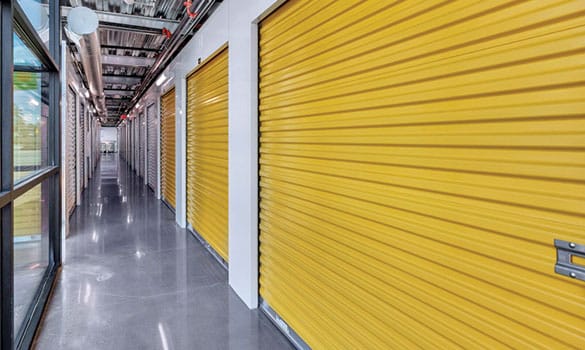
Most homeowners use their garage door multiple times a day without ever thinking about what is actually happening behind the scenes. You press a button, and the door goes up. You press it again, and the door comes down. It feels simple, but there is a carefully balanced system of parts working together every single time that door moves.
Understanding how a sectional overhead door works gives you a real advantage. You will know what sounds are normal and what sounds mean trouble. You will know which parts need regular attention and which ones should only be handled by a qualified technician. And if something does go wrong, you will have a much better idea of what you are dealing with before you make a call.
It All Starts With the Panels
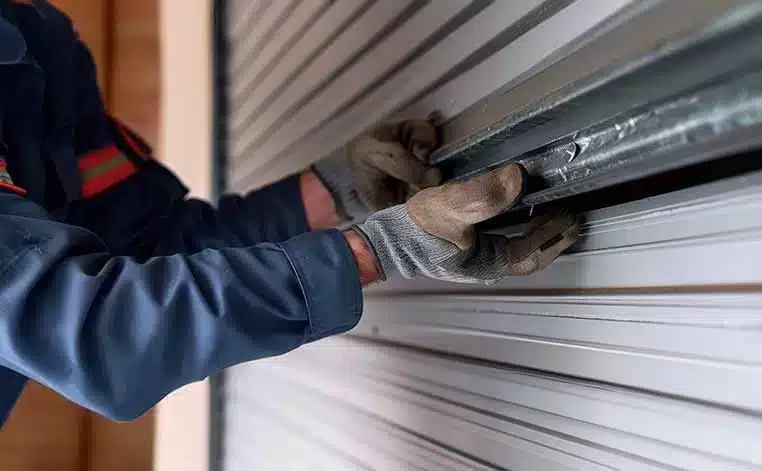
The foundation of any sectional overhead door is its panels. These are the horizontal sections stacked on top of each other that make up the face of the door. Most residential doors have four to six panels, each one connected to the next by a set of hinges. The same panel-based construction is also the standard in commercial overhead door service, where durability and smooth operation are just as critical as they are in any residential setting.
Those hinges are what make the whole system work. As the door moves, each panel pivots slightly at the joints, allowing the door to transition smoothly from a vertical closed position to a horizontal open one, all without any part swinging outward.
How the Panels Are Built to Move
- Panels are typically 18 to 24 inches tall each
- Hinges connect panels at each joint and allow controlled bending
- End hinges attach the outermost edges of panels to the rollers
- Center hinges support the middle of each panel along its width
If you are still building your understanding of the door itself before diving into how it moves, our guide on What Is a Sectional Overhead Door? covers the basics in full detail.
How the Track System Guides the Door
The track is the path the door follows every time it opens or closes. It runs in two sections on each side of the opening. The vertical section sits flush against the wall, and the horizontal section curves back along the ceiling into the garage.
Where those two sections meet is called the radius bend. This curved section is what allows the door to shift smoothly from moving straight up to sliding back flat overhead. Most standard residential openings use a radius of about 12 to 15 inches.
How the Track System Is Laid Out
- Vertical tracks guide the door straight up from the closed position
- The radius bend transitions the door from vertical to horizontal movement
- Horizontal tracks support the door in the fully open position
- Tracks are anchored to the wall and ceiling with brackets for stability
If you are considering whether all of this engineering makes a sectional door the right investment for your home, our guide on Reasons Why a Sectional Overhead Door Is Worth It lays out the full case clearly.
Rollers: The Small Parts That Do a Big Job
Rollers are the small wheel-like components attached to each panel that travel inside the track as the door moves. Without them in good condition, the door would scrape and grind, wearing out the hardware much faster.
Most residential sectional doors use either nylon or steel rollers. Nylon rollers run quieter and need less lubrication. Steel rollers are more durable but benefit from regular lubrication to keep friction and noise down.
What You Need to Know About Rollers
- Standard nylon rollers typically last 10,000 to 15,000 cycles
- Steel rollers with sealed bearings last longer and handle heavier doors better
- Worn rollers wobble inside the track and cause vibration and noise
- Rollers should be inspected every six months for cracks, flat spots, or wobbles
Springs: The Real Power Behind the Door
This is the part that surprises most homeowners. The garage door opener does not actually lift the full weight of the door. The springs do. The opener simply triggers the movement. The springs provide the counterbalance that makes a door weighing 150 to 300 pounds feel light enough to lift with one hand.
There are two types of spring systems used in sectional overhead doors.
Torsion Springs
Torsion springs are mounted on a metal shaft above the door opening. When the door closes, the springs wind up and store mechanical energy. When the door opens, that stored energy unwinds and does the work of lifting the door. Torsion springs are the standard for most modern residential installations because they provide smooth, even lifting and last longer than extension springs.
- Mounted horizontally above the door on a steel shaft
- Wind and unwind with each open and close cycle
- Average lifespan of 10,000 to 15,000 cycles, roughly 7 to 10 years with daily use
- Should only be adjusted or replaced by a qualified technician
Extension Springs
Extension springs are an older technology still found on many existing doors. They run along the horizontal tracks on each side of the door and work by stretching and contracting. When the door opens, the springs extend. When it closes, they contract and pull the door down.
- Located along the sides of the horizontal track
- Work by stretching rather than winding
- Require safety cables running through the center to contain them if they snap
- More prone to uneven wear compared to torsion springs
For trusted guidance on garage door safety standards related to spring systems, the Door and Access Systems Manufacturers Association (DASMA) is the industry authority on performance and safety requirements.
Cables and Drums: Connecting Springs to the Door
The springs do not connect directly to the panels. Instead, the lifting force travels through a system of cables and drums that transfer energy to the bottom corners of the door.
On a torsion spring system, drums sit at each end of the spring shaft. As the shaft rotates, the cables wind around the drums and pull up on the bottom brackets of the lowest panel, and that is what physically lifts the door.
What the Cable System Consists Of
- Lift cables run from the bottom bracket of the bottom panel up to the drums
- Cables are typically made from galvanized steel wire for strength and rust resistance
- A frayed or snapped cable is a serious issue that prevents safe operation
- Cables should be inspected for fraying, kinking, or looseness at least once a year
The Garage Door Opener: Triggering the System
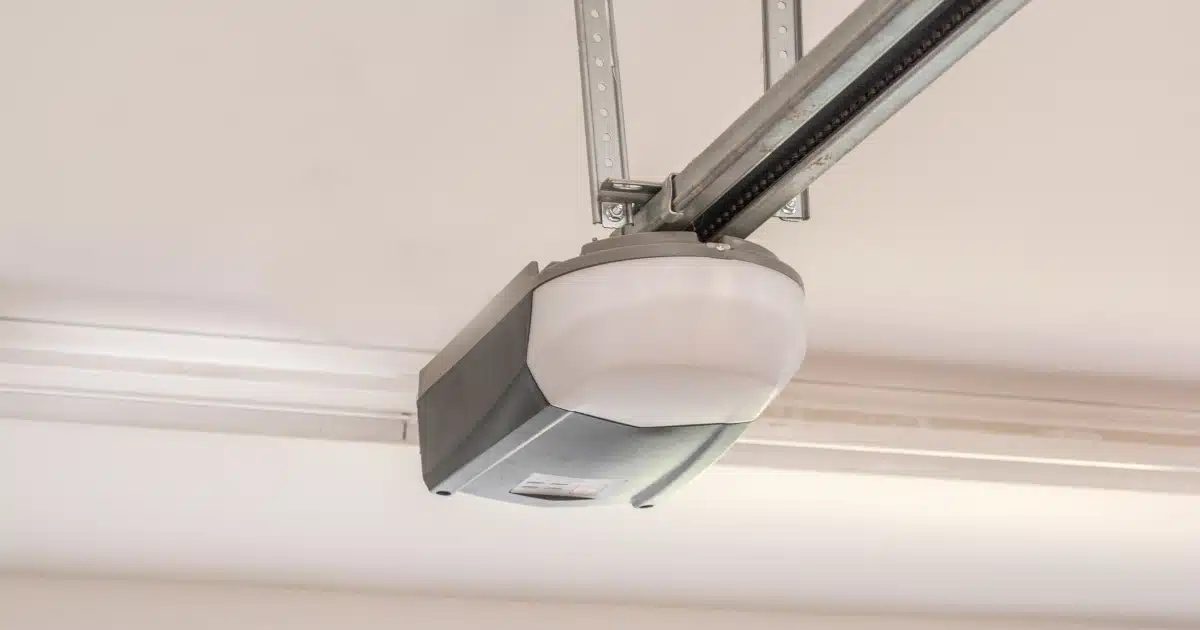
The opener is the motorized unit mounted to the ceiling that automates the door’s movement. It connects to the door through a drive system, and when activated, it engages the drive to pull or push the door along its track. The springs and cables do the heavy lifting. The opener simply starts and guides the process.
There are three main drive types used in residential garage door openers.
Chain Drive
Chain drives use a metal chain similar to a bicycle chain to move the door. They are reliable and affordable but tend to be the noisiest option. They work well for detached garages where sound is less of a concern.
Belt Drive
Belt drives use a rubber belt instead of a chain, making them significantly quieter. They are a popular choice for attached garages where noise carries into the living space.
Screw Drive
Screw drives use a threaded steel rod that rotates to move the door carriage. They have fewer moving parts, which means less maintenance, but they can be sensitive to temperature changes in extreme climates.
For a detailed comparison of opener styles and what works best for different garage setups, This Old House offers a thorough breakdown worth reviewing.
Safety Sensors and Auto-Reverse: How the Door Knows to Stop
Every garage door opener made after 1993 is required by federal law to have an auto-reverse mechanism. This feature stops and reverses the door the moment it detects something in its path while closing.
It works through two photo-eye sensors mounted near the floor on each side of the opening. If anything breaks the beam between them while the door is closing, the door immediately stops and reverses.
How to Keep Your Sensors Working Properly
- Sensors should be mounted no higher than six inches from the ground
- The indicator lights on both sensors should be steady, not blinking
- A blinking light usually means the sensors are misaligned or blocked
- Clean the sensor lenses monthly with a dry cloth to keep the beam clear
The Manual Release: Your Backup When Power Goes Out
Every sectional overhead door opener has a manual release cord, usually a red rope hanging from the opener carriage above the door. Pulling this cord disconnects the door from the opener drive, allowing you to operate the door by hand.
How to Use the Manual Release Correctly
- The release cord should always be accessible and clearly visible
- Pull the cord straight down or at an angle toward the door to disengage
- Never pull the release cord while the door is in motion
- Re-engage the opener by pulling the cord back toward the opener or by pressing the opener button after manually closing the door
How All the Parts Work Together in One Cycle
The Full Open and Close Sequence
- The opener motor activates and engages the drive mechanism
- The drive pulls the trolley and arm connected to the top panel of the door
- The torsion spring shaft begins to unwind, releasing stored energy through the cables and drums
- The cables pull upward on the bottom brackets, lifting the door from the bottom
- The rollers guide each panel along the vertical track and through the radius bend
- The door panels pivot at each hinge joint as they transition from vertical to horizontal
- The door comes to rest flat against the ceiling in the fully open position
- Closing reverses the entire sequence, with the springs winding back up as the door descends
What to Check Regularly to Keep the System Running Well
Now that you understand how everything works together, regular maintenance becomes a lot easier to approach. You do not need to be a technician to do a basic inspection. You just need to know what to look for.
Your Basic Maintenance Inspection List
- Listen during operation: Any new grinding, rattling, or scraping sound is worth investigating
- Watch the movement: The door should move smoothly and evenly on both sides without jerking or hesitating
- Check the balance: Disconnect the opener and lift the door manually to about waist height. It should stay in place. If it falls or shoots up, the springs may need adjustment
- Inspect the hardware: Look for loose bolts, worn rollers, frayed cables, or rust on any metal components
- Lubricate moving parts: Apply garage door lubricant to rollers, hinges, and the spring shaft twice a year
For guidance on that decision, our full breakdown of When to Replace Your Sectional Overhead Door walks through the key signs that a professional evaluation is needed.
A Well-Understood Door Is a Well-Maintained Door
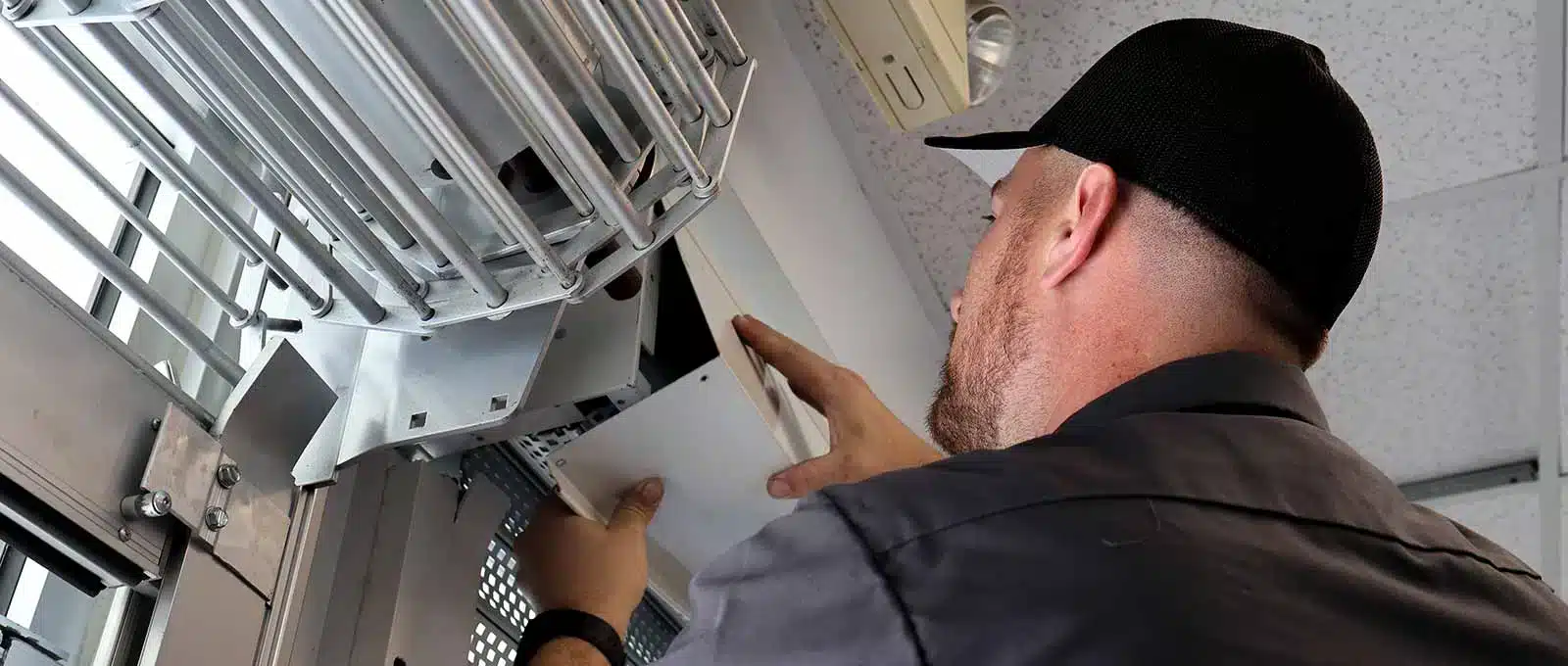
Every part of a sectional overhead door has a job to do, and when they all work together, the result is a system that is reliable, quiet, and safe. The more familiar you are with how each component functions, the better positioned you are to catch small issues before they turn into bigger ones.
If you are in Richmond, CA, and want a professional to inspect your sectional overhead door system or handle any repairs, R&S Erection of Richmond Inc has the expertise to get it done right. Contact us today or give us a call, and let our team keep your door running the way it should.