When the weather shifts in Richmond, CA, your garage door system often feels the effects. Humidity, fluctuating temperatures, and salty coastal air gradually wear down its components, with the garage door cable taking much of the strain. Over time, these conditions can weaken the system’s performance, leading to unexpected malfunctions if left unchecked.
By understanding how local weather influences your garage door, you can take simple steps to prevent sudden failures and costly repairs. Paying close attention to subtle changes in how your system operates helps you anticipate when a cable replacement or maintenance is needed. This same awareness also applies to gate operators, which can face similar wear from Richmond’s coastal climate. Regular inspections and timely adjustments keep both your garage door and gate operators safe, reliable, and running smoothly all year long.
Impact of Richmond’s Climate on Garage Door Cable Replacement and Longevity
Richmond’s coastal climate brings constant moisture and frequent temperature swings that take a toll on metal components. Over time, this combination puts steady pressure on your garage door cables, causing them to wear out faster than expected. The salt in the air only adds to the strain, gradually reducing the lifespan of these essential parts and affecting the smooth operation of your entire system.
Understanding how the local climate affects your garage door is key to keeping it in good shape. Consistent maintenance and timely cable replacement can prevent sudden breakdowns and extend the life of your system. In the sections ahead, we’ll look at the specific weather factors that cause the most trouble and share practical ways to keep your garage door working reliably year-round.
For more insights on protecting your garage door from Richmond’s challenging weather, check out our full guide “Garage Door Cable Replacement in Richmond, CA: Prevent Issues & Extend Lifespan.”
Seasonal Temperature Shifts and Their Effect on Garage Door Cable Strength
When temperatures rise, the metal in garage door cables expands, and when the air cools, it contracts. Though these changes are slight, the frequent temperature swings in Richmond make the cycle repeat day after day. Over time, this constant expansion and contraction gradually alters the cables’ tension, placing additional strain on the entire garage door system.
As the cables continue to stretch and shrink, they begin to lose strength and the ability to maintain proper tension. Without the right balance, the door becomes harder to lift and relies more on the torsion springs, which then wear out faster. The imbalance also forces the opener to work harder, adding even more stress to the system. Eventually, the cables may weaken or fray, leading to premature replacement if maintenance is neglected. Understanding how temperature changes affect cable tension helps Richmond homeowners spot early signs of wear and decide when it’s time for a professional inspection or replacement.
Moisture and Humidity: Long-Term Effects on Garage Door Cable Replacement
Richmond’s proximity to the bay keeps the air humid for much of the year, creating conditions that are tough on steel garage door cables. Constant moisture makes it easy for rust and corrosion to develop, slowly eating away at the metal and reducing its strength. Once corrosion takes hold, the cable begins to lose flexibility and can eventually snap under the strain of lifting or lowering the door, creating both performance and safety issues that often require repair or full replacement.
Because the air rarely dries out completely, garage door cables in Richmond tend to wear out faster than those in drier climates. Other metal components, such as extension springs, can corrode as well, but the cables usually show signs of damage first. Addressing rust early helps preserve the integrity of the entire system and prevents small issues from turning into costly failures down the line.
Coastal Air Exposure and Corrosion Risks Affecting Garage Door Cables
Living near the coast in Richmond exposes your home to salty air carried inland by the wind. Over time, this salt-laden breeze accelerates the wear on metal components, including your garage door cables and the cable drum. The fine salt particles settle on these parts and, when combined with moisture in the air, create a corrosive mix that quickly eats into the steel. As the metal weakens, the cables lose strength and can snap much sooner than expected.
Because salt accelerates rust and corrosion, homeowners in coastal areas need to inspect and maintain their garage door cables more often. Regular checks and timely repairs help prevent sudden failures that could damage the system or create safety risks. The same care should be given to swing gate operators, which can also be affected by the salty air and humidity common in Richmond’s climate. Scheduling maintenance early or searching for professional garage door cable replacement nearby ensures both your garage door and swing gate operators remain reliable and durable, even in harsh coastal conditions.
Recognizing Climate-Related Issues Before Garage Door Cable Replacement in Richmond
To avoid the inconvenience and safety risks that come with a broken cable, it’s important to recognize the early signs of damage caused by Richmond’s changing weather. Catching problems early can prevent a minor issue from turning into a costly garage door repair.
Watch for visible fraying, unusual noises, or uneven movement when the door opens or closes. These are early warnings that your cables may be losing tension or starting to fail. By paying attention to these subtle changes, you can address small problems before they lead to bigger repairs. The following sections will explain what specific signs to look for and how to keep your garage door system running smoothly.
To learn more about the best time to act before cable issues become costly, explore our detailed guide “Understanding When to Schedule a Garage Door Cable Replacement in Richmond, CA.”
Visible Signs of Weather-Driven Damage Requiring Garage Door Cable Repair
Weather can take a toll on your garage door cables, and there are several signs that reveal when damage has started to set in. Inspecting the cables regularly helps you catch these issues early, allowing a professional to step in before the problem worsens. Ignoring the warning signs can lead to a door that no longer operates safely or efficiently.
When a cable is damaged, the entire system can lose balance and become unsafe to use. You might notice one side of the door hanging lower than the other or see that a cable has loosened. Other common signs that it’s time for a garage door cable repair include:
- Fraying: Wire strands beginning to separate from the cable.
- Rust: Orange or brown discoloration forming along the metal.
- Stretching: A cable that sags or slips off the drum.
- Kinks: Sharp twists or bends that weaken the cable’s structure.
If you spot any of these issues, your cable may have lost its strength due to environmental wear. A trained technician can determine whether an adjustment to the cable drum will fix the problem or if a full cable replacement is the safer solution.
The Role of Rust and Moisture in Replacing Garage Door Cables
Moisture is one of the leading causes of rust, and few things damage garage door cables faster. In Richmond’s humid climate, rust can appear quickly and begin to eat away at the steel, weakening the cables from the inside out. What starts as a light coating soon turns into deep corrosion that quietly undermines the strength needed to support the door’s heavy weight.
As rust builds, the cables lose tension and can no longer handle the stress from the torsion springs. The door may start moving unevenly, struggle to open or close, or even become unsafe to operate. In some cases, a corroded cable can snap without warning, putting extra strain on other components and risking serious damage. If you notice rust, it’s best to have a professional inspect your system right away. They can assess the extent of the corrosion and recommend whether a full cable replacement is needed to keep your garage door safe and reliable.
Detecting Early Indicators Before a Garage Door Cable Failure
Your garage door doesn’t always show damage through visible wear alone. Sometimes, the first warning signs appear as unusual sounds or subtle changes in how the door moves. These early clues often indicate that the cables are beginning to fail, and noticing them as part of your regular maintenance can help you catch issues before they turn into major repairs.
If you hear grinding, scraping, or screeching noises when the door operates, one of the cables may be fraying or rubbing against the drum or pulleys. A door that jerks, moves unevenly, or gets stuck mid-motion can also point to cable tension problems. Common early signs include:
- Loud grinding or scraping sounds during operation
- A crooked or unbalanced door as it moves
- Slower or uneven motion when opening or closing
- Sagging or loose cables on either side
Recognizing these symptoms early allows you to act before the cables fail completely, reducing the risk of injury or property damage. Routine maintenance not only helps you catch these issues in time but also keeps your garage door opener running smoothly and safely. The same principle applies to slide gate operators, which benefit from regular inspections and lubrication to prevent wear caused by Richmond’s changing weather. Keeping both your garage door and slide gate operators properly maintained ensures long-lasting performance and dependable operation throughout the year.
Garage Door Cable Repair and Replacement Practices for Richmond’s Conditions
Repairing a garage door cable in a coastal area like Richmond requires a different approach. The salty air and shifting weather conditions can wear down cables much faster than in drier climates, which means standard repairs often aren’t enough. Experienced garage door technicians understand these challenges and use methods designed to handle the unique demands of coastal environments.
Choosing high-quality materials and following proper repair techniques ensures the work lasts longer and performs safely. Because garage door cables hold significant tension, safety must always come first throughout the process. The following tips highlight the best ways to approach garage door cable repair and replacement in tough coastal conditions, offering practical and reliable solutions for homeowners who live near the bay.
For a deeper look into how regular maintenance can protect your home and prevent unexpected failures, read our featured article “Keeping Your Home Safe Through Regular Garage Door Cable Replacement in Richmond, CA.”
Minimizing Fraying and Corrosion During Garage Door Cable Repair
To ensure your garage door cable repair lasts, professionals use techniques designed to prevent future fraying and rust. Replacing the cable is only part of the job; the real work lies in the careful installation and precise adjustments that account for Richmond’s humid, coastal climate.
Because garage door cables operate under high tension, attempting repairs without the proper tools or training can be extremely dangerous. A professional technician follows strict safety procedures to manage these risks and performs several key steps, such as:
- Making sure the new cable sits correctly in the grooves of the drum
- Setting the proper tension to eliminate slack and reduce friction
- Balancing the chain and springs for even weight distribution
- Using high-tensile cables designed to resist moisture and salt
When these steps are combined with regular maintenance, they help the cables withstand Richmond’s weather and keep your garage door running smoothly for years to come.
Selecting Climate-Resilient Materials for Reliable Garage Door Cable Replacement
Choosing the right cable material is one of the most important steps in ensuring a dependable garage door cable repair, especially in a coastal area like Richmond. Standard cables often can’t withstand the salty, humid air that accelerates corrosion, so selecting materials designed for damp environments can greatly extend the life of your garage door system.
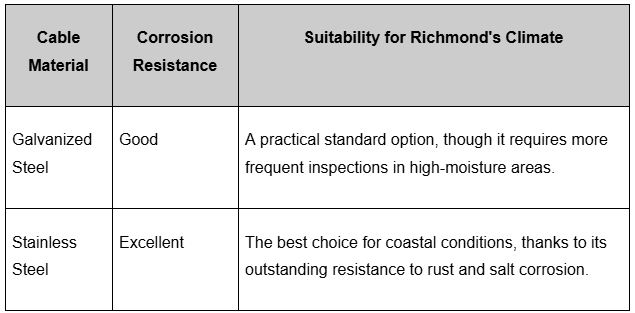
Professionals typically recommend corrosion-resistant materials for homes exposed to Richmond’s coastal weather. Galvanized steel cables provide solid protection and are a common choice, but stainless steel offers superior resistance to rust and salt damage. The material you choose not only affects how long your cables last but also how safely and smoothly your garage door operates over time.
Investing in higher-grade, corrosion-resistant cables helps prevent early wear, reduces the need for frequent replacements, and ensures reliable performance year after year. The same attention to quality applies to access control systems, which should be maintained and inspected regularly to ensure seamless and secure operation. By combining durable garage door components with dependable access control, you can enhance both the safety and convenience of your property in Richmond’s demanding coastal climate.