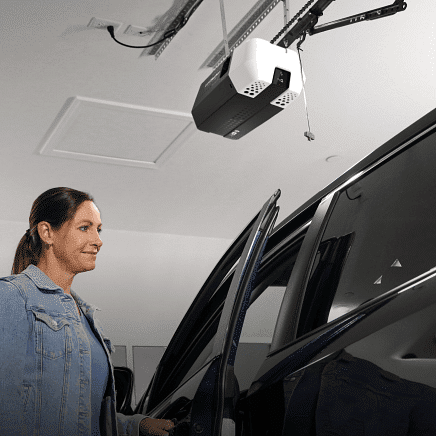
Hearing a click from your garage door opener without any door movement can be confusing and frustrating. This sound usually indicates that the opener is responding to a signal, but something within the system is preventing normal operation.
- You press the remote or wall control and hear the opener click, yet the door remains closed.
- The clicking sound shows the opener is receiving power and input.
- The door staying shut suggests an interruption in movement or system response.
- Possible causes may involve electrical flow, mechanical resistance, or safety monitoring functions.
- Internal component or system-related issues can also prevent the opener from operating as expected.
Recognizing what the clicking sound represents provides useful context for understanding garage door openers, how they respond to commands, and why further evaluation may be necessary when the door does not open.
Why a Garage Door Opener Clicks Without Opening
When a garage door opener clicks but does not open, it indicates the system is receiving the command and attempting to start, but the process stops immediately afterward. The clicking sound comes from an internal relay engaging, which should send power to the motor and begin movement. If the motor does not run after the click, the operation has been interrupted due to a power issue, safety response, or resistance within the system, helping narrow down where the problem occurs.
For a deeper explanation of this issue and related causes, see our guide “Why Does My Garage Door Opener Click but Not Open?”
Electrical Power Flow Interruptions
When a garage door opener clicks but does not open, the issue may stem from an interruption in power delivery. The control system can still receive enough power to respond to a command, producing a click, while the motor lacks the energy required to move the door.
- Low-level power reaches the logic board but not the motor
- Power interruptions or fluctuations disrupt operation
- Backup power sources fail to support motor startup
- Internal wiring limits electrical flow
- Electrical damage interferes with motor engagement
These conditions prevent the opener from completing the opening cycle even though it appears to respond to the command.
Control Signal Breakdown Between Components
A clicking sound can also indicate that the opener receives a signal but cannot relay it properly through the system. Communication issues between internal components can stop movement immediately after the click.
- The logic board fails to communicate with the motor
- Signal transmission between components is disrupted
- Input commands are incomplete or conflicting
- Safety-related feedback overrides movement commands
- The system halts to avoid improper operation
When component signals are misaligned, the opener pauses operation rather than activating the motor.
Internal Safety Response: Preventing Door Movement
Garage door openers are designed to prioritize safety, and the system may block movement even when a command is received. The opener may click while safety monitoring prevents the door from opening.
- Sensors detect an obstruction or an interrupted path
- Sensor alignment prevents confirmation of a clear opening
- Environmental interference affects sensor communication
- Safety logic overrides motor activation
- Door movement is restricted to prevent risk
In these cases, the opener’s response reflects normal safety behavior rather than a mechanical failure, which is also characteristic of systems like a LiftMaster residential operator that prioritize safety-based shutdowns.
Mechanical Conditions That Can Trigger Clicking Sounds
Beyond electrical or signal-related issues, a clicking sound can also point to a mechanical problem within the garage door system. In this situation, the opener receives the command and attempts to start, but movement stops immediately because resistance or a disconnected component prevents the door from opening. The motor may briefly engage, then shut down when it cannot transfer force through the drive system, tracks, or door components, resulting in a click without motion.
For more insight into these mechanical interruptions, explore our related article “What Prevents a Garage Door Opener From Engaging?”
Disengaged or Interrupted Drive Connection
A garage door opener may click without opening when the connection between the motor and the door is interrupted. In these cases, the opener activates, but the force needed to move the door never reaches it.
- Trolley remains disengaged from the drive system
- The drive chain or belt is broken or displaced
- The internal drive gear is worn or damaged
- Motor runs without transferring motion
- The mechanical linkage fails to engage the door
When the drive connection is interrupted, the opener responds to commands but cannot move the garage door.
Resistance Detected Along the Door’s Travel Path
Garage door openers are designed to stop operation when resistance exceeds safe limits. The system may click as it attempts to start, then immediately shut down when resistance is detected.
- Obstructions interfere with rollers or tracks
- Track damage restricts smooth door movement
- Door weight exceeds normal operating limits
- Springs fail to offset the door’s load
- Safety thresholds trigger an automatic stop
In these situations, the clicking sound reflects a safety response rather than continued operation.
Load Imbalance Affecting Opener Engagement
A balanced garage door allows the opener to operate with minimal effort. When balance is lost, the opener may attempt to lift the door, detect excessive strain, and stop immediately.
- Door weight is no longer evenly supported
- Spring tension no longer offsets door mass
- Motor detects abnormal load resistance
- Internal protection systems halt operation
- Clicking occurs without sustained movement
Even without visible damage, load imbalance can prevent the opener from engaging properly and completing the opening cycle, a situation that often requires emergency garage door service to address safely and promptly.
How Opener System Design Influences Clicking Behavior
The type of garage door opener can influence how clicking problems sound and how the system responds when an issue occurs. Different opener designs, such as chain, belt, screw, or direct drive, use different internal components that affect noise levels and behavior during a malfunction. Recognizing how each opener type typically reacts when a problem is present helps explain why a click may be followed by silence or additional noise, and provides clearer insight into where the issue may originate.
To explore this topic further, read our related guide “Can a Garage Door Opener Click and Still Be Faulty?”
Chain, Belt, and Screw Drive Response Patterns
Different drive systems influence how a garage door opener behaves when a problem occurs. While all three types may click when a command is received, the sounds and symptoms that follow can vary based on how motion is transferred.
- Chain drive systems may click, then rattle or vibrate if gears or connections are worn.
- Belt drive systems often click with minimal noise due to reduced vibration
- Screw drive systems may click while the drive rod turns without moving the trolley
- Worn threads or internal gears interrupt motion transfer
- Movement attempts stop when resistance or wear is detected
These response patterns reflect how each drive design handles power and mechanical stress during operation.
Wall-Mounted and Direct Drive Operational Differences
Wall-mounted and direct drive openers use different layouts that affect how clicking issues present themselves. Their designs limit moving parts but make system balance and internal components more critical.
- Wall-mounted systems stop immediately when spring or balance issues are detected
- Direct drive systems isolate problems to the motor or internal controls
- Clicking may occur without external movement components involved
- Fewer moving parts narrow the source of the malfunction
- System response depends heavily on internal engagement
Because of their compact designs, clicking without movement usually points to a specific internal interruption.
Motor and Gear Interaction During Start Attempts
When a garage door opener clicks, the motor is being signaled to start turning its internal gears. If the gears fail to engage properly, movement stops even though the motor attempts to run.
- Motor receives power and begins to spin
- The small drive gear attempts to turn the main gear
- Worn gear teeth fail to transfer motion
- Motor hums or whirs without door movement
- The system stops to prevent further strain
In these cases, the clicking sound highlights a breakdown between motor effort and mechanical engagement rather than a lack of power or signal, a condition commonly identified during residential garage door repair evaluations.
Connected Systems That May Affect Opener Operation
Modern garage door openers rely on interconnected components that extend beyond basic opening and closing functions. Features such as wireless controls, safety sensors, and backup power systems work together to manage operation, and a malfunction in any of these connected elements can interrupt normal movement. When these systems detect an issue or fail to communicate properly, the opener may respond with a click while preventing the door from moving.
Sensor Communication and Monitoring Functions
Garage door safety sensors constantly communicate with the opener to confirm that conditions are safe for movement. When this communication is disrupted, the system may acknowledge a command with a click but prevent the motor from running.
- Sensor signals fail to confirm a clear operating path
- Wiring issues interrupt communication between sensors and the opener
- Corrosion or wear affects sensor connections
- Internal sensor components stop responding correctly
- The system enters a safety hold state to prevent movement
In these situations, the clicking sound reflects the opener’s safety logic responding to incomplete or unreliable sensor feedback.
External Control Devices and Input Recognition
Garage door openers rely on external devices to receive commands, and problems with these inputs can interrupt normal operation. The opener may register the signal and click, but fail to proceed if the input is inconsistent or unclear.
- Control devices send conflicting or incomplete signals
- The receiver or logic board processes input incorrectly
- Signal recognition occurs without motor activation
- Intermittent input response causes inconsistent behavior
- System pauses to avoid unintended operation
When input recognition breaks down, the opener may respond audibly without initiating door movement.
Backup Power and Auxiliary System Interaction
Backup power systems are designed to support garage door operation during electrical interruptions, but issues within these systems can limit performance. The opener may attempt to draw power, resulting in a click without sufficient energy to move the door.
- Backup battery lacks sufficient charge to support operation
- Power source switching does not occur as expected
- Auxiliary systems draw limited power without motor engagement
- Charging or storage components fail to sustain output
- The system responds partially but halts before movement
In these cases, the clicking sound indicates an attempted transition in power supply rather than full operational readiness.
Understanding Why a Garage Door Opener Clicks but Won’t Open
When a garage door opener clicks but does not open, understanding the underlying causes helps make sense of the issue. Electrical interruptions, mechanical resistance, or system coordination problems can all affect how the opener responds to a command. Gaining a clearer view of how the opener and its components work together makes it easier to identify why the door is not moving and what part of the system may be involved.
For homeowners who want reliable insight and dependable support, R&S Erection of Richmond Inc is a trusted local resource with extensive experience handling a wide range of garage door and opener issues. Our knowledgeable team focuses on accurate evaluation and long-term performance, helping homeowners better understand their systems and restore smooth operation. If your garage door opener is clicking but not opening and you want professional guidance, contact us today or give us a call to schedule an inspection and get your garage door working properly again.